

By Steve Fillmore and Carolyn Sullivan, The Local (NW Local paper)
Start Local Podcast and Camphill Village Kimberton Hills held a Community Connections event on Friday, December 5, 2025 at the Camphill Café, bringing together neighbors and local professionals for a morning conversation about how local decisions are made—and why they matter.
The forum was moderated by Liam Dempsey, co-host of the Start Local Podcast, which focuses on people and organizations working to strengthen communities across Chester County. The featured speaker was Robert “Rob” Jefferson, a private practice attorney and former City Solicitor for Coatesville, who presented “Championing Community Through Local Legislation.”
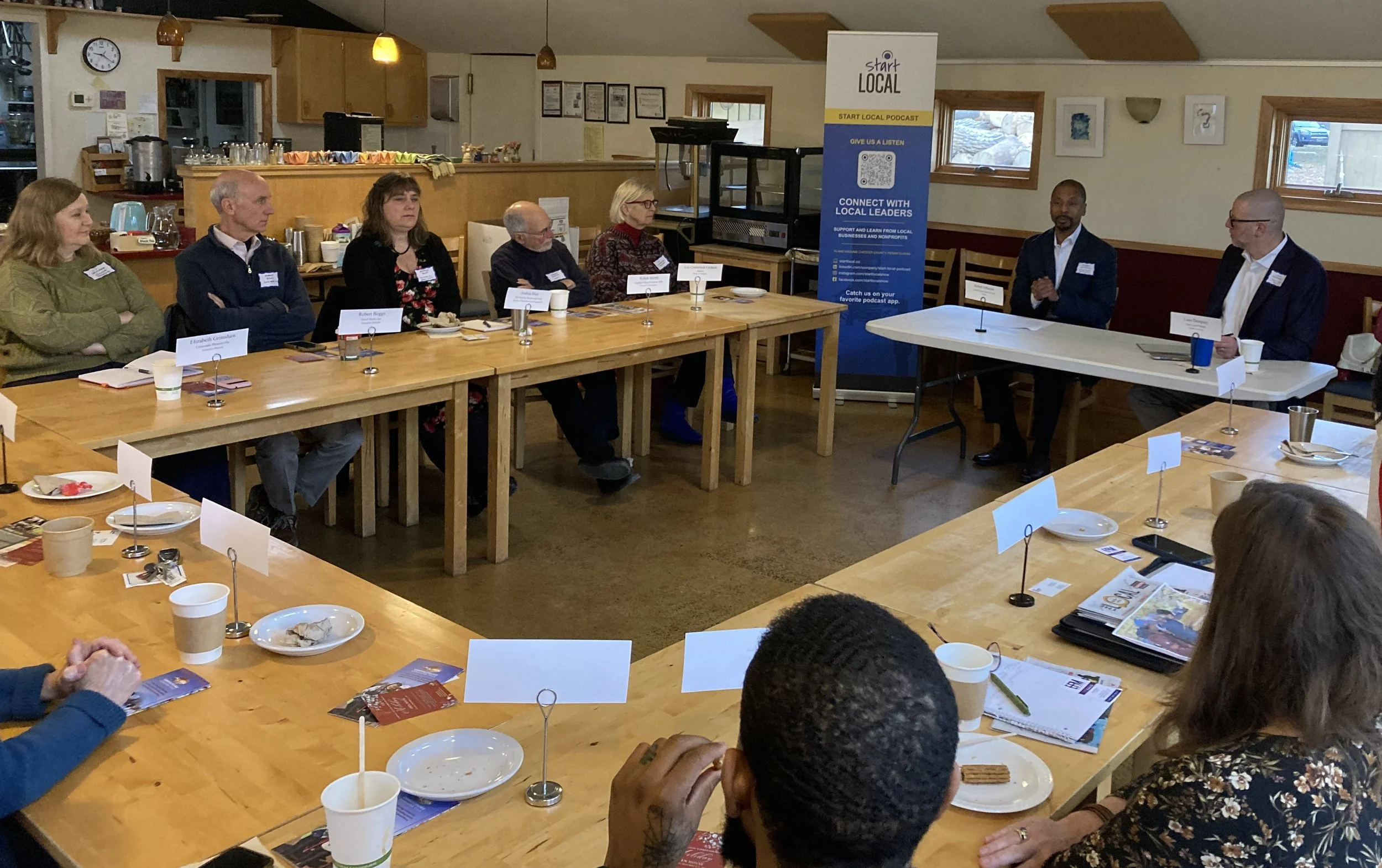
While the topic could have felt technical, the discussion stayed practical and accessible. Questions continued after the formal presentation ended, and several attendees exchanged information about upcoming local events and markets.
A Tiny Ordinance, a Big Legal Lesson
Jefferson shared an example of how everyday rules can stretch far beyond their original purpose.
In a small Arizona town, officials adopted different regulations for various types of temporary signs, including church, political, and real estate signs. When a church was cited for installing simple directional signs pointing people to services, it challenged the ordinance. The case eventually reached the US Supreme Court, which ruled that municipalities may regulate neutral features like size or placement, but not the content of a sign.
That decision, born of a local dispute, now shapes sign ordinances nationwide, including in Chester County.
Jefferson noted that this is often how ordinance challenges unfold: A rule is enforced, a resident believes it goes too far, and the issue moves to court. Most cases never escalate dramatically, but even small ones can influence how local governments operate for years.
Setting Priorities Locally
The sign case raised a larger question: Who is actually responsible for writing local rules?
Jefferson explained that Pennsylvania’s townships, boroughs, and cities work within the powers granted by the Commonwealth. What each municipality prioritizes depends on its needs. Rural areas may focus on open space or farming issues; denser boroughs often pay more attention to infrastructure or development.
Across the state, ordinances are written and approved by elected bodies such as township supervisors, borough councils, and city councils. These boards make decisions about:
how tax dollars are spent
how parks and roads are maintained
how public works operates
how development is reviewed
how local rules are enforced
As one attendee noted, these are “the meetings we should be attending,” and Jefferson agreed. Many decisions affecting daily life are made in public meetings that are often lightly attended.
Meetings Matter
Jefferson emphasized that township and borough meetings are open to anyone and are often where the most practical decisions are made. These meetings give residents a clearer view of how local government functions, from budget discussions to ordinance drafts. You don’t need a legal background, just an interest in how your town functions.
For anyone looking to better understand or influence local issues, Jefferson pointed to attending these meetings as one of the simplest ways to stay informed and involved.
Laws in Real Life
Before wrapping up, the forum opened for questions. One attendee brought up a recent news story about the National Guard being deployed to New Orleans to support immigration enforcement. Local groups there planned to observe and record what happened, but a new state law banning people from “impeding enforcement activity” raised concerns about what that actually means.
Jefferson noted that enforcement falls on a spectrum: quietly filming from a distance is generally not considered interference, while stepping into officers’ space or blocking their work would be treated very differently.
Even though the example involved federal activity, it connected with one of the morning’s central points—laws don’t live on paper alone. They show up in real situations, and understanding how they’re applied helps people respond more effectively.
Coming in January
The next Community Connections Forum is scheduled for Friday, January 9, and will feature Ronan Gannon from LCH Community Services, who will discuss health needs in underserved communities. LCH provides medical, dental, behavioral health, and social services to individuals who are insured, underinsured, or uninsured.
Community Connections offers a chance to learn, ask questions, and see how different parts of our community fit together. And if you’re curious about what’s happening around you or want to meet others who care about the place we share, attending the next meeting is a worthwhile step.
Community Connections gatherings typically take place on the first Friday of the month at the Camphill Café, and community members are welcome to attend, though registration is required.